Monday, May 30, 2011

Cooking Light for Memorial Day

Memorial Day is a special holiday for Americans. We celebrate this day to honor those before who have served their country and those who serve today. Brave men and women have dedicated their lives to the service of our great nation, some of them at the cost of those lives. For this reason it is important that we dedicate one day each year to remember and honor their sacrifices. One way we celebrate as A young patriot salutes heroes at the 2009 Nat...Image via WikipediaAmericans is by gathering together with friends and family and having picnics, barbecues, and bonfires to commemorate those who now serve, those who have served in the past, and countless others that we will never know.

The downside to our Memorial Day celebrations is a menu that lingers with us in the form of calories well beyond the festivities of the day. If you're looking for a great way to enjoy the day without feeling deprived and still avoid some of the heavy hitting calories that we consume far too many of on a normal Memorial Day there is help to be had. Keep reading to discover some excellent methods for cutting calories from your Memorial Day feasts.

1. Grill your chicken instead of frying it. Fried chicken has for a very long time been a favorite among those celebrating almost any occasion - particularly in the south. However, this packs on unwanted calories that would be better spent on dessert rather than the main course. Another thing you can do is to skip the sauce. By this, I mean barbecue sauce. There are plenty of great rubs that Some chicken, pork and corn in the barbequeImage via Wikipediacan be used on your beef, pork, and chicken that pack a powerful punch when it comes to taste and leave off those pesky calories that sugar filled barbecue sauces add to your favorite dishes.

2. Have salad as a side. In addition to salad as a healthy side option, include fresh cut up vegetables and low fat dressing as a dip for sides as well as appetizers. By having these available for your guests you may be surprised to discover that others appreciate the healthy options just as much as you do. Even cooked vegetables that aren't dripping in cheese sauce, butter, or other types of fats provide a better option than high carb, high fat sides such as macaroni and cheese, potato salad, and mashed potatoes.

3. Have fruit on hand to help diminish the craving for sweets. While I would not dream of completely depriving you of dessert, I recommend two steps to help make the fight against fat a more survivable contest of wills. First, have at least one sugar-free dessert option available for those that are dieting, and offer fruits. By combining the healthier sweet treat of fruit with a delicious sugar free dessert in a smaller portion you are doubling the health benefits. One popular item Mixed berries, dollop of light sour cream, spr...Image via WikipediaI have seen lately in grocery stores is red & blue berry bowls - strawberries, raspberries, and blueberries are seasonal treats that go right along with the holiday colors!

Finally, homemade ice cream has for a long time been a favorite family tradition for Memorial Day, Independence Day, and Labor Day. You do not have to say no to all the good things in life even if you are trying to watch what you eat. By eliminating the empty calories many of us consume in sugary drinks, and following the steps above you just might find that ice cream is a delicious option for you after all without completely blowing the good work you've done. (For a special red, white, & blue treat, try some berries - from the tip above - over your ice cream!) Just remember that moderation is the key.

If you allow yourself a taste of the really good stuff along the way you will be much less likely to fail in your healthier living efforts. In addition to watching the calories you put into your body on Memorial Day be sure to take stock of the calories you burn. Go for a walk, take a hike, pick up a game of flag football with the family, or dance with the little ones in the afternoon. Consistent efforts to burn more calories while consuming less will net the greatest results whether it is a holiday or not.

And most of all, remember what we are celebrating for, and enjoy the company of your loved ones!
Enhanced by Zemanta

Friday, May 27, 2011

Video - Farmer's Market Recipe: Radish Salad with Mustard Vinaigrette

'Tis the season for radishes, and whether you've hit up the local farmer's market, or you got them through your CSA, here is an amazingly fresh and tasty recipe that will get you in the mood for all those summer salads!

If you think you don't like radishes (or have never tried them), this one may make you a fan! Check it out, and of course let us know how you like it - and feel free to share your own variations as well.

Radish Salad with Mustard Vinaigrette | Farmers Market Cooking Show | Episode 3 of 7
Easy radish salad recipe. Today Jen gets inspired by some gorgeous English breakfast radishes that she spots at the market. Once you see how easy her scrumptious radish salad with mustard vinaigrette is to prepare, you will never pass up radishes at ...


Other Fun Spring Salad Recipes:
     

Wednesday, May 25, 2011

Using Nutrition Labels to Make Healthy Choices

The nutrition label located on processed food items will tell you a lot of information about that food.  For some however, this information isn't exactly that reader friendly, and may contain hidden pitfalls for your health.  Fear not, as it's actually easier than you think. Here are some helpful tips.

US Nutritional Fact LabelImage via WikipediaServing Size
This size is based on the recommended amount per item, based on the USDA food pyramid. Similar food items will have similar serving sizes, thus making it easier to compare 2 foods of the same category. Paying attention to serving size can be very valuable, as many people are surprised that servings of fruits and vegetables may be larger than they expected, while a serving of grains may be smaller (this is due to the caloric content of various foods - some are denser than others).

% Daily Value
This indicates how the vitamins and minerals in a food product will fit in a 2,000 calorie diet.  This will help you to understand if the food has a lot, or just a little of the important nutrients. (Keep in mind that NOT everyone should eat a 2,000 calorie diet - your correct caloric intake depends on a variety of factors, including height, weight, and daily activity level, as well as whether you are trying to lose weight or gain it, so remember that when looking at the nutrition label, this is just a guideline, as you may eat more or less than 2,000 calories per day. Here is a quick tip for finding out how many calories you need per day: If you get 30 minutes of daily exercise, you need to consume about 15 calories per pound of body weight, to maintain your current weight (less if you are trying to lose weight, OR if you get less exercise;  more if trying to gain, or if you get more exercise). For example, if you get 30 minutes of exercise per day, and you weigh 120lbs, you need about 1800 calories per day to maintain your current weight.)

The middle section
The nutrients you'll find listed in the middle section are some of the ones most important to your health.  This information can help you to calculate your daily limit of fat, fiber, sodium, sugar, and other nutrients. (However, you will want to make sure you DON'T just rely on this section - you will also want to make sure you read the ingredients! Some items naturally contain sugar or sodium, while others have these ingredients added. Just because an item says it contains "2 g" of sugar doesn't necessarily mean there is sugar added - it may be naturally occurring in - for example - dried or fresh fruit, etc. It is also important to watch out for artificial ingredients, many of which may be very harmful to your health, and these won't show up in this section of the label.)

Vitamins & minerals
The percent daily value found here is the U.S. Recommended Daily Allowance for vitamins and minerals.  (This may help in your choosing of supplements, but most processed foods do not contain that many vitamins and minerals - keep in mind you may need much more of these than the RDA - the RDA is the MINIMUM to avoid a deficiency disease only - it does not mean that is what you need for optimum health.)

Ingredients
Now we get to the largest, and usually most important part of the label. Anytime you buy a processed food product, you should ALWAYS read the ingredients! You may be shocked to find out some of the stuff that is added to your food. Watch out for (and try to avoid) artificial sweeteners, artificial colors and flavors, and excess preservatives. Not sure what all of these might be named?  They can go by a lot of different names, but as a general rule of thumb, if you can't pronounce it, don't eat it! Long chemical-sounding names are best avoided. Stick with whole, real food ingredients that you recognize. Also, the ingredients are listed in descending order, from the largest amount to the smallest, so the first few ingredients on the Raw (unrefined, unbleached) sugar, bought at t...Image via Wikipedialabel constitute the majority of the product. (Watch out for sugar here! Sugar is a sneaky one, as it goes by so many names - sometimes there are 4 or more kinds of sugar in one product - keep an eye out for sugars in the first few ingredients on the label - especially if there are multiple types - this means the majority of the product consists of sugar! High-fructose corn syrup is typically easy to spot, but some of the others may not be. If in doubt, keep an eye out for the "-ose" -- e.g. sucrose, lactose, fructose, etc. - these are all sugars.)

In a hurry? Here is a really quick helpful tip for reading ingredients labels: The fewer ingredients the better.

More ingredients means more junk added to your food. Even just glancing at the label to see if it is short or long, can help you eat healthier!  In general, the more processed the food, the longer the list of ingredients. And you may be surprised how many things are added to the simplest items.

For example, did you know that most "sour cream" now sold in grocery stores is not cream at all?  REAL sour cream contains just 2 ingredients (at most): cultured cream, and salt. (Some leave out the salt, and some list the cream separate from the culture - so it may say "cream and enzymes," or something similar.)  Many brands of "sour cream" on store shelves now have 5 or 6 ingredients, and cream is not even at the top! Not good. Steer clear of these overly processed brands if you can. (In terms of sour cream, Daisy and a few store brands still make the real stuff.)

Now that you know what the nutrition label actually means, it'll be a lot easier to make healthy food choices.

Enhanced by Zemanta

Monday, May 23, 2011

Healthy Grocery Shopping Tips

For any cook, grocery shopping is something we all have to do, and sometimes choosing the right foods can be very hard indeed.  There are some tips to assist you with your healthy grocery shopping:

Example of an American grocery store aisle.Image via Wikipedia1.  Never go grocery shopping on an empty stomach. Anyone who has done this will attest that you will end up buying way more than you intended, and often things that you normally wouldn't even think of eating! (Once, in a fit of hunger-induced delirium while shopping, I actually picked up a package of Twinkies! Thankfully, one bite of the greasy, sticky, sugar-sponge was enough to spoil my appetite....)

2.  Select canned fruits and tuna that are packed in water, not oil or syrup.

3.  Look at the labels for the words "hydrogenated" or "partially hydrogenated".  The earlier you see them appear on the list, the higher the amount of unhealthy trans fatty acids the food will contain.

4.  If you absolutely must buy frozen dinners (which we don't recommend - they are full of preservatives, highly processed, and often don't even taste that good; instead, when you cook, make extras and freeze the leftovers in small portion-sized containers), select those that are not only low in fat, but low in sodium
and sugar as well.

5.  If you aren't consuming enough dairy products, try calcium-fortified orange juice, or take a supplement containing a citrate form of calcium, as well as magnesium and vitamin D, as these help your body absorb calcium.

6.  Opt for whole grain breads, cereals, and rolls. If you can find them, sprouted grain breads are even more nutritious and much easier on your body to digest and use (plus they are delicious!).

7.  Shop around the outside edges of the store. This is where the fresh foods are offered, such as vegetables, meat, and fresh baked goods. By staying out of the center aisles, you will avoid the more heavily processed and unhealthy foods, as well as avoiding temptation!

8.  Don't be tricked into buying "yogurt"-covered nuts or raisins thinking they are healthy, as the coating is normally made of sugar and partially hydrogenated oils.

The City of Rockville Maryland farmers MarketImage via Wikipedia9.  Try some natural treats, such as dried fruit, or a frozen fruit bar containing several actual fruits (avoid artificial ingredients, and try to go for a lower-sugar brand.

10. Skip the grocery store altogether, and join a CSA or make it a habit to shop at your local farmer's market! Not only will you be buying MUCH fresher and healthier foods, you will also be supporting your local community and economy, and avoiding all the junky temptations on the grocery store shelves. You will probably even save money by avoiding all those impulse buys!

By following the above tips when grocery shopping, you'll avoid the bad foods and get those that you need.  There are many different healthy foods out there, all it takes is the will power to go past the bad foods and on to the good ones.
Enhanced by Zemanta

Friday, May 20, 2011

Recipe - Paleo Chicken & Pumpkin Curry

Here is a yummy one for you! This is an example of a recipe from the Paleo Diet cookbook - judging from this one, I think I will be making some more Paleo recipes soon! Check it out, and be sure to let us know what you think....

Pumpkin and Chicken Curry

Ingredients:
2 chicken breasts, sliced
5 cups pumpkin, diced
2tbs olive oil
1 onion, diced
2 garlic cloves, finely chopped
2tbs ground ginger
1tbs ground turmeric
2tbs ground coriander
2tbs ground cumin
1 ½ cups vegetable stock
1 bunch fresh coriander (cilantro), chopped
Salt

Instructions:
  1. Fry onion and garlic in a large pan with oil on medium heat for 2 minutes. Add chicken and cook, stirring constantly for 10 minutes or until chicken has turned white.
  2. Add pumpkin, ginger, turmeric, coriander and cumin and stir for 1 minute.
  3. Add stock and leave to simmer on low heat for 15 minutes. Add chopped coriander, cover pan and cook for a further 2 minutes.
  4. Season with salt to taste. Cool slightly before serving.

Like this one? The Paleo Cookbooks provide you with a range of dishes for every occasion - from light no-fuss meals through to dinner parties, family celebrations and summer salads. Simple and Easy to Create Recipes with clear step by step instructions you will be able to produce paleo friendly meals that get rave reviews from friends and family every time!

Visit www.paleocookbooks.com for more great recipes!

Paleo Cookbooks - Recipes for the Paleo Diet
Enhanced by Zemanta

Wednesday, May 18, 2011

Video - Paleo Diet vs. Food Pyramid

This quick video explains the differences between the USDA Food Pyramid, and the Paleo Diet. I am SO in agreement with their assessment of processed foods (which I'm sure you know if you've been reading this blog for long!)  :-)    Please excuse the typos - it's still a lot of good info, and a lot of people have had great success following this diet.


Paleo Diet vs. the Food Pyramid: The food pyramid emphasizes a lot of modern day processed foods. Maybe it's because the billion dollar grain industry created the food pyramid?? Or maybe its just a sheer misunderstanding of nutrition. Our food pyramid should really be based on what we should eat as humans to obtain good health, and what our body needs in order to stay healthy....


Click here for more info on the Paleo Diet


Enhanced by Zemanta

Monday, May 16, 2011

Paleo Diet - Interview with Greg Battaglia

This week we will be focusing on the Paleo Diet, which has become quite popular over the past few years, as people become more aware of their health, and how much what we eat really does affect us. Don't know what the Paleo Diet is?  Read on to find out! And for some recipes and videos, be sure to check back later this week.
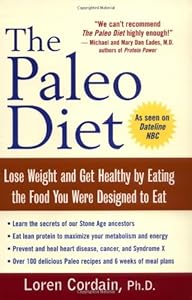
Cover of "The Paleo Diet: Lose Weight and...Cover via AmazonThe Paleo Diet in the Modern World
Interview by Nikki Young

The paleo diet is defined by eating meat, fish, vegetables, fruits, plants, nuts and seeds. But should we be concerned, or at least aware of the modern modifications we often implement to create a meal? Are we eating paleo with too many modifications, or do we hold the ability to create an even more nutritiously dense meal and obtain better health than our ancestors? What if we could find out the exact foods our closest genetic ancestors ate and mimicked that to our diet as close as possible, would we obtain the same good health our ancestors had, or has our environment changed too much that our bodies now require more?

To obtain a better insight I spoke with Greg Battaglia.

The paleo or paleolithic diet is one which bases the concept of the foods available to our hunter gatherer ancestors, which ultimately breaks down to foods provided and found in nature, without the necessity or addition of modern food techniques, chemicals, preservatives or processing. The fundamentals of the paleo diet provide us with the basic guidelines and principles we should apply to our diets and lifestyle today; not necessarily the exact foods available to our ancestors within their environment.

But the question then arises, are we ultimately in a position now where we are fortunate enough to have a large range of food sources we can choose from - and have the ability to achieve even greater health than our ancestors because of this? Or should we possibly be avoiding many of the food sources our ancestors wouldn't have had available and/or in the amount they would have had available, because our genes are still adapted from the more minimal food sources our ancestors consumed and had available?

Greg:
It is known that our ancestors had generally good health and didn't suffer from many of the chronic illnesses that we do today. Ultimately the diet of our ancestors varied somewhat depending on where they lived, their environmental climates as well as other factors.

Ancestors living around Canada would live mostly of fresh salmon, deer, elk, berries and plants. Whereas ancestors living around Africa would have lived on plant roots and animals. And then there are the Aboriginals in Australia who live off the land who eat animals, bugs, plants, native nuts and honey.

Bushmen in Deception Valley, Botswana demonstr...Image via WikipediaNikki:
But research shows all our ancestors had good health - because they where eating natural food sources available. But if this changed, and Aboriginals suddenly lived in Canada, eating salmon and berries, and ancestors in Africa suddenly lived in the outback of Australia - would they all still have vibrant health?

Greg: 
This is a great question that I've pondered myself self many times. I can't say that I have an exact answer. I personally look at paleo as an explanation for why certain dietary strategies work rather than a prescription, per se. For instance, the fact that many people are gluten intolerant can be explained using the paleo model. If gluten didn't cause any problems we wouldn't tell people to not eat grains simply because our ancestors didn't. I guess what I'm saying is that the paleo model can guide our ideas, but ultimately solid science must be there to confirm it.

In terms of diets differing based on geographic locating, there is some evidence that isolated groups develop adaptations to certain foods. For instance, the people on the island of Okinawa have developed a salivary enzyme that is used specifically for breaking down starches contained in rice, whereas people of European descent do not have this specific enzyme. This is obviously due to the fact that Okinawans have been eating a lot of rice for a long time and somehow were able to develop some adaptations to it.

I think it's also important to consider that probably not all of our ancestors in the Paleolithic were necessarily healthy. Some probably had to survive long periods on limited food sources and indeed developed deficiencies. Others probably survived in a lush environment with a wide variety of nutrient dense foods and flourished with excellent health.

I think at the end of the day the goal is two-fold:
1. Get all essential nutrients needed
2. Avoid things that cause problems (possibly grains, dairy, legumes)

Whether all of our ancestors were able to do this or not is irrelevant to our modern needs. The fact that the Australian Aboriginals, the Inuit, and the Kalahari Bushmen were able to survive for so long suggests that all of their diets met the 2 previous requirements. If they didn't, they would have died off pretty fast, as I'm sure happened to plenty of cultures that failed to thrive.

Paleolithic-style dish: Seafood stewImage via WikipediaI think the main reason that paleo works so well is because it simply removes the stuff that we know to cause problems. Whether you eat lots of fish, broccoli, spinach, and collard greens or lots of beef, cauliflower, carrots, and sweet potatoes (not saying that you can eat just those foods and meet all nutritional requirements) and end up meeting all your macro and micronutrient and calorie needs you'll be healthy since you met your needs and avoided the stuff that's going to cause damage in the first place.

Nikki:
Although our ancestors wouldn't have combined many of the foods we have, we are now able to eat more than one nutritious food source at any one time. Additionally, combining certain foods can help the synergy of nutrients and help with digestibility. With that in mind, should we be concerned with high calorie meals, high carb meals or liquid meals even if 100% of the ingredients are paleo friendly? And does this ultimately begin to go outside the basic principles of the paleo diet?

Greg:
When it comes to food combining, I keep a very simple rule: never eat a meal that is both high in fat and carbs. All meals should be either high in fat and protein OR high in protein and carbs, but never high in both fat and carbs. The reason for this is that the insulin spike that follows carb consumption signals for fat molecules to be stored at the nearest adipose sites. If blood insulin levels and blood fat levels are simultaneously elevated body composition will suffer along with performance, as the body will be running on glucose rather than the more consistent burning fat.

Don't get me wrong, calories still count when it comes to fat loss and body composition, but so do macronutrients ratios and combinations. However, it's also important to understand when to consume a protein/carb meal. The best time is post-workout if you have a performance goal. If I don't workout on a particular day I keep all of my meals high in protein and fat and low in carbs, since my muscle didn't need any glycogen to be replace, hence the absence of a post workout meal containing starchy carbs.

Here would be my recommendation:
  • For general health/longevity: 90% of the time eat high protein/high fat meals, even post-workout. Eat meals higher in paleo carbs occasionally to re-calibrate insulin sensitivity.
  • For performance goals: Eat a high-carb (starchy paleo carbs such as sweet potatoes, squash, yams, etc.)/high protein meal post workout after metabolic conditioning workouts, but not after strength work. The rest of your meals should be high protein/high fat/low carb.
However, since the paleo lifestyle is one based on health, longevity, and quality of life I think it's key to stay with the basics:

Eat whole paleo foods, keep carb and fat meals separate, moderate calorie intake and don't gorge, load up on veggies and pastured meats, incorporate some intelligent intermittent fasting, develop some stress reducing techniques, exercise just enough to get the benefits, but not enough to get injured or cause long-term wear and tear. When you have goals that go beyond that, such as performance or body composition goals, you have to stretch the paleo concept and make some compromises with your lifestyle and sometimes with your health and longevity.

NOTE: Interview has been edited for length. If you would like a copy of the full interview, please post a comment below and we will arrange to get you a copy.

Be sure to check back for some yummy Paleo recipes and more interesting info on this unique way of eating, later this week!


Paleo Cookbooks - Recipes for the Paleo Diet
Enhanced by Zemanta